Walk the length of Island Estates Parkway at the right point, and you can see both of the island's waters from the same spot. To the west, the Intracoastal Waterway carries a steady current of runabouts, sailboats, and the occasional barge working its way south. To the east, the water sits still enough to hold a kayak's reflection. Same island, same afternoon, two entirely different waterfronts.
Most residents here already know which side their dock faces. Fewer know why the two sides behave so differently, and the answer has nothing to do with which builder platted which lot. It has to do with a decision made more than a century ago, long before anyone was pouring a seawall or hanging a dock light.
The Channel That Got Promoted
Before Island Estates existed as an island at all, the waterway on its eastern edge was the main route through this stretch of coast. What residents now call the canal, or Fox Cut, was originally the Florida East Coast Canal, the primary north-south passage for boat traffic long before the modern Intracoastal Waterway was cut. As larger vessels and heavier traffic outgrew that older channel, engineers dredged a new, wider route roughly a quarter mile to the west. That new cut became the Intracoastal Waterway most boaters use today. The old canal didn't disappear. It just stopped being the main road.
That original channel still carries a name boaters recognize on the charts: Fox Cut, a narrow bend running roughly three miles near Intracoastal mile markers 804 to 807, with average depths of six to eight feet. Palm Coast Marina sits just north of it, the last fuel stop before a boater commits to the cut. It's a modest, workable channel, exactly the kind of infrastructure you'd expect from a route that once handled the region's real boat traffic and now handles considerably less of it.
One Side Gets the Barges, the Other Gets the Herons
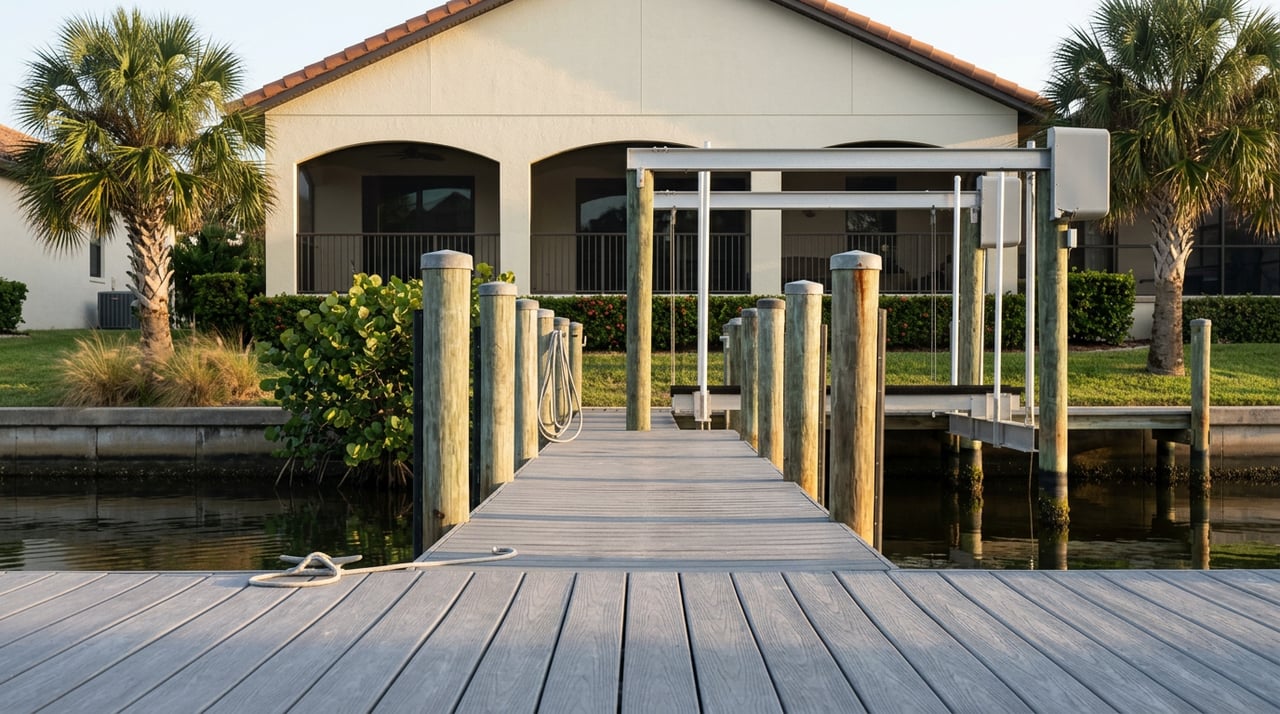
The practical result of that hundred-year-old engineering choice is still visible from a dock chair today. The Intracoastal side, built for capacity, still functions as a working channel. Residents there watch a mix of recreational boats, sailboats heading toward St. Augustine or Daytona, and heavier commercial traffic pass close enough to wave at. The canal side never got upgraded for that kind of volume, so it stayed quiet, and quiet water tends to attract a different kind of activity.
| Intracoastal side (west) | Fox Cut / Florida East Coast Canal side (east) | |
|---|---|---|
| Origin | Newer channel, dredged to replace an older, narrower route | The original waterway, in use before the Intracoastal existed |
| Typical traffic | Recreational boats, sailboats, occasional barge traffic | Kayaks, paddleboards, small runabouts, quieter docks |
| Depth | Deep-draft capable, built for volume | Roughly six to eight feet near Fox Cut |
| Everyday feel | A front-row seat to passing boats | A calmer backyard waterway |
Neither side is objectively better. A homeowner who wants to watch the marine traffic go by, sailboats at sunset, the occasional tug, gravitates toward the Intracoastal frontage. A homeowner who wants to launch a kayak before the coffee's cold gravitates toward the canal. Whichever side you're on, the personality of your water isn't random. It's a leftover decision from an engineering project that predates the neighborhood itself.
Which Beach You Use Depends on Which Water You Woke Up To
The same east-west split shows up on land, too, though it's easier to miss because both options are gated and reserved for owners. Island Estates residents have access to two private beach walkovers rather than one. Pelican Dunes Beach sits centrally in the broader Hammock Dunes community and handles the bulk of daily foot traffic. Sandpiper Dunes Beach sits directly across from the Island Estates owners' entrance and functions as the quieter, closer option, the one locals tend to use for a dog walk or an early stretch of uncrowded sand before the day gets going.
In practice, most residents settle into a routine without ever comparing notes with a neighbor on the other side of the island:
- Live nearer the community's center, and Pelican Dunes becomes the regular walkover.
- Live nearer the Island Estates entrance, and Sandpiper Dunes is the shorter walk, and the one most often used for the dog.
- Either way, the beach itself is never crowded, since access is limited to the roughly 190 households currently built out on the island.
That last point matters more than it sounds. Island Estates was originally platted for 200 homesites, and only a handful remain vacant today, which means the two walkovers serve a fixed, familiar population rather than a growing one. On an island this size, that's part of what keeps the beach feeling private even though it technically belongs to nearly two hundred households.
The One Day Both Sides Show Up
Given how cleanly the island splits along its two waterfronts, one moment actually mixes canal-side and Intracoastal-side neighbors together. Twice a year, the Hammock Dunes social committee hosts and funds a community beach party, an afternoon built specifically to bring new and established residents together. It's a small gesture, but on an island this size, it does real work. Most days, your neighbors are the people who share your water. Twice a year, they're everyone.
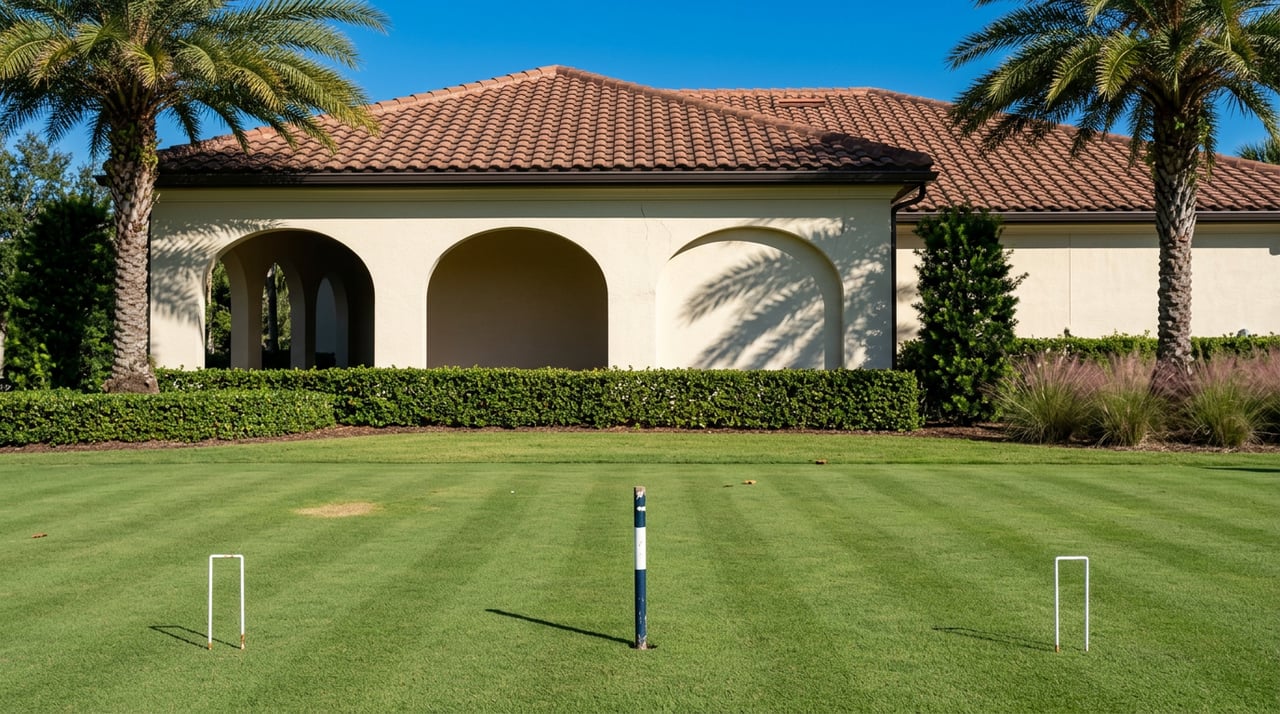
Club membership follows a similar pattern. Joining the Hammock Dunes Club, with its two golf courses, oceanfront dining, tennis, and croquet lawns, is entirely optional for Island Estates owners. Some residents join and cross paths at the clubhouse regardless of which side of the island they live on. Others never join at all and experience the neighborhood purely through its water and its walkovers. Either path is a normal way to live here. The club is one more thing that splits along personal choice rather than geography.
The Split Isn't a Flaw, It's the Point
None of this is a design flaw or an oversight. Island Estates exists as an island in the first place because engineers chose to dig a second channel rather than widen the first one, and the personality difference between its two waterfronts is simply that decision, still playing out a century later.
It also explains something residents may notice without naming it: the Intracoastal side tends to move a little more deliberately than its width would suggest, particularly in the warmer months when Flagler County's manatee protection measures are most active on parts of the Intracoastal Waterway. The canal side, carrying far less traffic to begin with, rarely needs the reminder.
Beyond the water itself, the broader Hammock Dunes community is recognized as an Audubon International Sustainable Community, with a trail network winding through the community's 1,220 acres of oak hammock, wetlands, and lakes, another reminder that the land here was shaped with as much intention as the water was.
If you're weighing what's next for your Island Estates home, or simply want a conversation with someone who tracks this island as closely as you live on it, Coastal Pros is glad to talk it through, no obligation attached.