If you are considering a move to Palm Coast from out of state, you likely want ocean access, quality amenities, and an easy, well-managed transition. You also want clear answers on neighborhoods, travel logistics, insurance, and how to buy remotely with confidence. This guide gives you a concise, practical roadmap tailored to affluent buyers and second-home seekers. You will learn where to focus, what to budget, and how to navigate Florida-specific rules so your first months feel seamless. Let’s dive in.
Why Palm Coast works for relocations
Palm Coast sits on Florida’s northeast Atlantic coast between St. Augustine and Daytona Beach, and it has been growing quickly in the early 2020s. Local reporting points to a rising population and steady in‑migration, a useful signal of long-term community vitality and services according to FlaglerLive.
The climate is warm and humid for most of the year, with mild winters and hot summers. The area follows a seasonal rhythm, with a higher visitor and snowbird period from roughly November through April. If you plan to split time seasonally, it helps to understand how this affects reservations, tee times, and service availability as outlined in a Palm Coast travel overview.
Travel access is practical. Expect about 60 to 90 minutes by car to Jacksonville International Airport (JAX), which is a common inbound hub for out-of-state owners based on typical drive distances. Orlando International (MCO) is often 1.5 to 2 hours, and Daytona Beach International (DAB) can be under an hour in many cases. Palm Coast also sits along I‑95, which supports easy private-car or car-service transfers.
Neighborhoods to shortlist
Each Palm Coast area offers a distinct lifestyle. Start with your top priority: oceanfront privacy, resort amenities, golf-club culture, or a classic small beach town.
Hammock Dunes: Oceanfront, private-club living
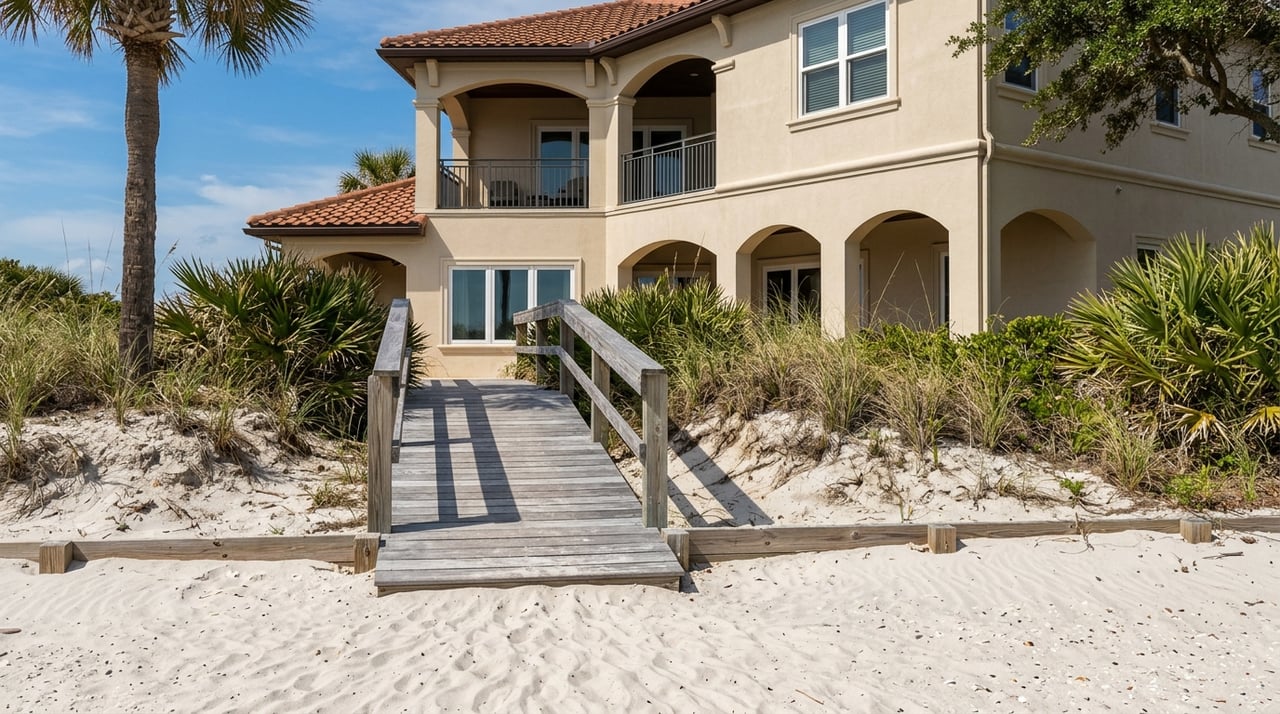
Hammock Dunes is a gated, oceanfront community with a private country club, golf, and direct beach access. You will find condominiums, villas, and custom oceanfront homes with a focus on services and privacy. Club memberships are separate from HOA dues, and full privileges require initiation and ongoing dues per the official community overview.
Hammock Beach: Full-service resort lifestyle
Hammock Beach centers on a resort complex with golf, spa, dining, and marina access. It blends owner-occupied luxury with resort-managed services and some rental options, subject to HOA and resort rules. This is ideal if you want hotel-caliber amenities, a managed experience, and flexibility for friends and family visits.
Grand Haven: Private golf and preserve setting
Grand Haven is a master-planned, golf-centric community designed for owners who want club access, trails, and nature-adjacent neighborhoods at price points below direct oceanfront. If you prefer an inland club setting with amenities and a strong social calendar, put it on your list.
Flagler Beach and barrier-island towns: Old Florida charm
Just south along the barrier island, Flagler Beach offers a small city with a pier, casual dining, and a classic beach-town feel. Lots can be smaller and homes more varied in age and style, which many buyers appreciate for character and walkability. Regulations and rental rules differ by municipality, so verify local ordinances directly with the city when you evaluate properties.
How to compare communities
- Oceanfront private-club settings provide the highest privacy and service mix, with higher purchase and membership costs.
- Resort-style communities deliver hotel-like amenities and convenience without full oceanfront single-family pricing.
- Master-planned golf communities offer robust amenities and social life at modestly lower price points than oceanfront.
- Classic beach-town areas trade larger resort amenities for walkability and a more traditional coastal vibe.
What homes cost and what to budget
Citywide, typical Palm Coast home values sit in the mid hundreds of thousands, and they have moved up meaningfully over recent years. Luxury oceanfront condos and single-family homes often exceed seven figures, especially in private-club or resort enclaves. Neighborhood comps vary widely, so focus on building-level and street-level data when you refine offers.
For carrying costs, expect two separate expense streams:
- HOA or condo fees that fund building and community operations.
- Club initiation and annual dues if you want full golf or social privileges in private communities.
Build a buffer for one-time joining fees, ongoing dues, reserves, and potential special assessments. For property taxes, Flagler County follows Florida’s ad valorem tax system. Florida’s homestead exemption and the Save Our Homes assessment cap apply only to a primary residence that meets filing rules and deadlines under state statute. Check the City of Palm Coast’s tax guidance for practical context as you plan your first year’s budget.
Insurance, hurricanes, and flood due diligence
Palm Coast is in a coastal, storm-exposed region. Atlantic hurricane season runs June 1 through November 30 as noted by regional meteorologists. Before you make an offer, confirm your property’s flood zone and elevation, and request wind and flood insurance quotes early. Palm Coast participates in FEMA’s Community Rating System, which can lower National Flood Insurance Program premiums for some properties per the city’s flood-preparedness resources.
A few best practices will save time and stress:
- Review FEMA flood maps and request elevation certificates when applicable.
- Ask for current HOA budgets and reserve studies in condo buildings, plus any pending special assessments.
- Verify roof age, window and door ratings, and any mitigation features that may affect wind insurance pricing.
Short-term rentals: Know the rules first
If rental income matters, confirm feasibility before you buy. In the City of Palm Coast, short-term vacation rentals require a business tax receipt and registration, with a defined application checklist outlined by the city. Rules can differ across HOAs and buildings, and neighboring municipalities may have their own standards. Always check city and county requirements alongside your HOA’s rental covenants.
Healthcare and wellness access
You will find hospital-level care at AdventHealth Palm Coast, with services appropriate for most routine and urgent needs per the hospital’s location overview. For specialized tertiary care, many residents look to larger regional centers in Jacksonville and the St. Augustine area. If you have specific medical needs, map your providers and insurance networks during your planning visits.
If schools factor into your move, review district resources and program options directly with Flagler Schools for the most current information. Keep assessments neutral and rely on official sources when comparing programs or offerings.
How to buy from out of state
Get aligned on goals and financing
Clarify your use case first: primary, seasonal, or investment. Secure lender pre-approval if you plan to finance, and define a price band that includes purchase plus carrying costs. Then shortlist two to four communities that match your lifestyle priorities.
Tour virtually, then visit at the right times
Use high-quality virtual tours and live video walkthroughs to refine your shortlist. Plan at least two in-person trips if possible. Visit during peak season to feel the area’s energy and service levels, then return during shoulder or summer months to experience heat, humidity, and off-season rhythms.
Structure smart offers and inspections
Include standard contingencies for inspection, appraisal, and clear title. Order licensed inspections for structure, roof, pest, and HVAC. For coastal properties, request an elevation certificate and flood-risk review, and get insurance quotes during the inspection window to confirm affordability.
Close securely, including remote options
Florida permits Remote Online Notarization, which allows certain closing documents to be signed remotely under defined rules and with approved providers under Chapter 117. Some lenders or title companies may still require in-person steps, so confirm logistics early and line up trusted professionals who have completed remote closings before. If you need a Power of Attorney for a limited task, keep it narrow and transaction-specific.
Plan the move and first 90 days
If you will be seasonal, line up housekeeping, maintenance, and emergency contacts. For primary relocations, schedule movers and car shipping with extra lead time during peak arrival months. Set up utilities and insurance prior to closing, and calendar any HOA orientation or club onboarding steps early so you can enjoy amenities from day one.
Sample relocation timeline
- Weeks 1 to 2: Define goals, confirm financing, and create a shortlist of neighborhoods and buildings.
- Weeks 3 to 6: Tour virtually, gather preliminary insurance and tax estimates, and plan a peak-season visit.
- Weeks 7 to 10: Visit in person, refine targets, and prepare offers with clear contingencies.
- Weeks 11 to 14: Enter contract, complete inspections and insurance quotes, finalize title and closing method.
- Weeks 15 to 18: Close, onboard utilities and services, and begin club or HOA orientation.
Local insights that matter
- Peak season affects everything. Restaurant reservations, tee sheets, and contractor availability tighten between November and April. Build this into your visit and closing timing.
- Airport mix is part of the lifestyle. JAX is often your reliable inbound, MCO offers broader routes, and DAB can be fastest door to door for certain trips based on typical drive distances.
- Community culture varies by gate and street. Oceanfront club life, resort services, inland golf, and small beach-town living each feel different day to day. Spend time in each before you decide.
Your next steps
- Clarify your must-haves: oceanfront or golf, condo or single-family, private club or resort services.
- Build a full-cost picture: purchase, taxes, HOA or condo fees, club dues, insurance, and a prudent reserve.
- Schedule a peak-season visit and a follow-up trip for inspections and closing logistics.
If you want a discreet, end-to-end experience in Palm Coast’s premier neighborhoods, connect with The Coastal Professionals. Our team specializes in oceanfront, resort, and club communities, and we will guide you from first tour to a smooth, confident closing.
FAQs
How far is Palm Coast from major airports?
- Plan about 60 to 90 minutes to Jacksonville International and roughly 1.5 to 2 hours to Orlando International, with Daytona Beach International often under an hour for many itineraries based on typical drive distances.
When is Palm Coast’s peak season for buyers and visitors?
- Visitor and snowbird activity typically rises from November through April, which can affect reservations, service availability, and overall pace of life per a regional travel overview.
What should I know about Florida hurricane season before buying?
- Hurricane season runs June 1 through November 30; confirm flood zone and elevation, request insurance quotes early, and review Palm Coast’s flood-preparedness resources for mitigation steps from meteorologists and the city.
Can I close on a Palm Coast home from out of state?
- Yes. Florida allows Remote Online Notarization for certain documents, though your lender or title company may require some in-person steps, so confirm requirements early under Chapter 117.
How does Florida’s homestead exemption work for new residents?
- The homestead exemption and Save Our Homes assessment cap apply only to a primary residence that meets state filing rules and deadlines; second homes and investment properties do not qualify per state statute.
What distinguishes Hammock Dunes from other areas?
- Hammock Dunes is a gated, oceanfront, private-club community with beach access and membership-driven amenities; club dues are separate from HOA fees per the official community site.